



Why so many service pages fail to convert
Most service pages are designed to look like a service page, not to function like one. They open with broad claims, a generic headline, and a vague list of capabilities. That may look polished, but it does not help a buyer decide whether you are the right fit for the project in front of them.
A high-converting service page should reduce uncertainty. Visitors need to understand what you do, whether you do it for businesses like theirs, what the process looks like, how long it usually takes, and what happens next. If those answers are missing, people leave to keep comparing options.
This is also where SEO and GEO performance suffers. Pages that avoid specifics are harder to rank and harder for AI systems to summarize accurately.
A practical service page structure that supports rankings and conversion
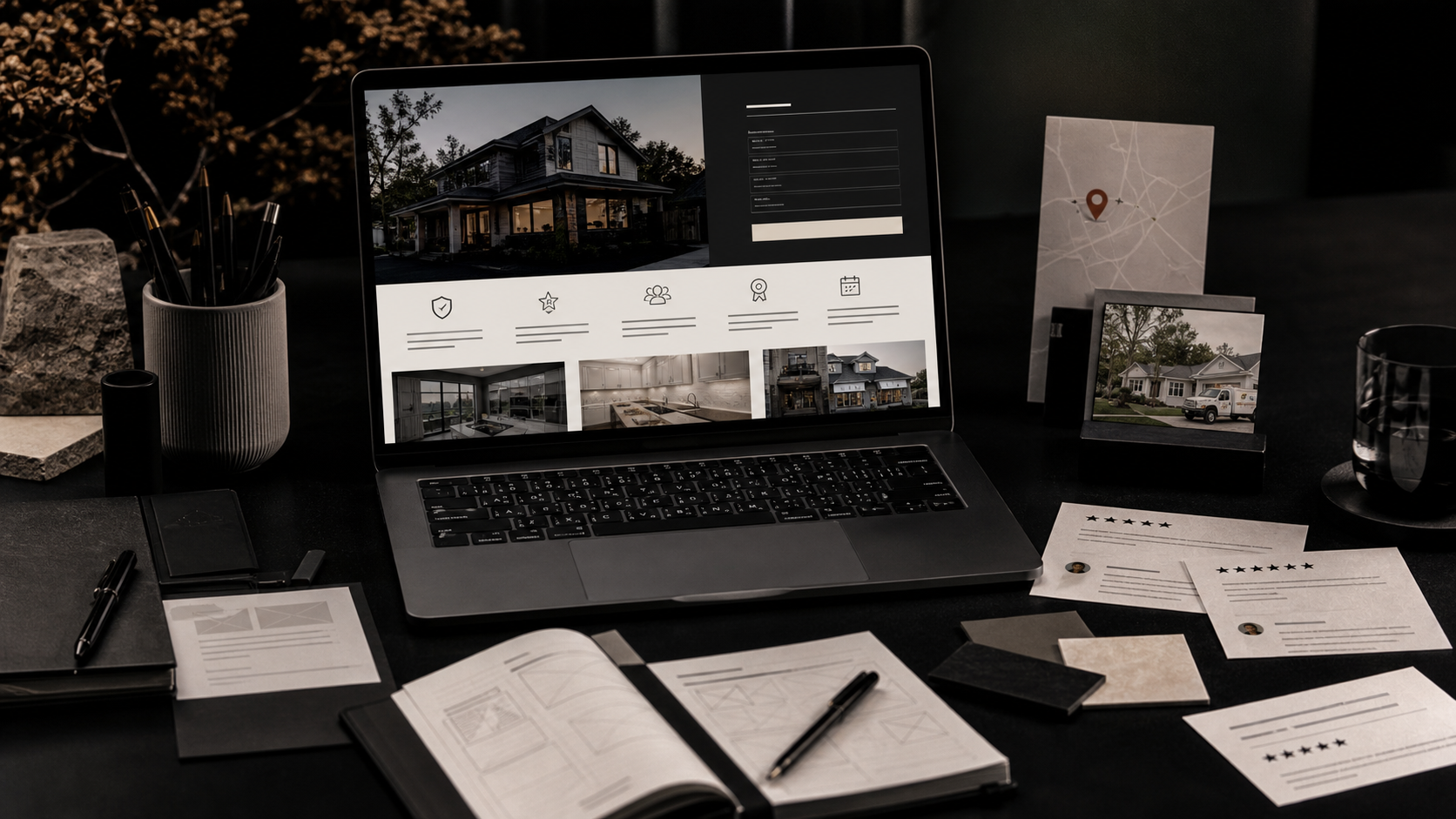
The best service pages are easy to scan, but still deep enough to answer serious buying questions. That means starting with clarity, then layering in proof and process. Design polish matters, but sequence matters more.
- Clear headline naming the service and audience, with enough specificity to set expectations.
- Short supporting paragraph describing outcomes and typical use cases.
- Primary CTA plus a lower-friction secondary CTA where appropriate.
- What is included: deliverables, scope, and optional add-ons.
- Process overview with realistic steps and timeline expectations.
- Proof section: examples, case snippets, results, or before/after context.
- FAQ section addressing objections and practical logistics.
- Final CTA aligned to intent (estimate, consult, audit, project inquiry).
Copy choices that earn trust faster than flashy design
If your service page copy sounds interchangeable with everyone else in your category, the page will feel riskier even if the design is excellent. Buyers are trying to predict what working with you will feel like. Specific language reduces that uncertainty.
Instead of saying you deliver 'innovative solutions,' describe the decisions you help clients make. Instead of saying you are 'full service,' list the deliverables and what the engagement includes. Instead of only saying you care about results, explain how you scope, review, and iterate work.
Specific copy also supports stronger AI summarization because the page contains concrete facts instead of marketing abstractions.
- Use plain-English service definitions before introducing creative language.
- Name the industries or business types you commonly support.
- Add scope boundaries so the offer feels grounded and professionally managed.
- Include timeline ranges and revision/process expectations when possible.

On-page SEO elements that matter on service pages
You still need the basics: strong titles, headings, internal links, and useful metadata. But service-page SEO is less about sprinkling keywords and more about comprehensive intent coverage. If the page answers the search intent better than competitors, the page has more ranking durability.
Target one primary intent per page, then support it with related terms naturally in headings, FAQs, and examples. For example, a web design page can mention redesigns, new builds, landing pages, and conversion strategy, but it still needs one clear primary keyword and page purpose.
- One primary keyword intent per page.
- Descriptive H1 and supporting H2s that mirror customer questions.
- Internal links to related services and proof pages.
- FAQ markup only when the FAQs are visible and useful on-page.
- Canonical URLs and clean URL structure to prevent duplication.
How to improve conversion rate without over-optimizing the page
Conversion improvements often come from reducing friction, not from adding more persuasive language. A visitor who is ready to inquire should not have to hunt for what happens next. A visitor who is not ready should still have a lower-friction way to move forward.
For service pages, one of the best improvements is matching the CTA to the buying stage. Someone searching for a provider may be ready for a project inquiry. Someone searching a niche or comparison query may respond better to a strategy call, audit, or scoped consultation CTA.
You can also improve lead quality by setting expectations on the page. Clear minimum scopes, project types, and process details help reduce mismatched inquiries and improve close rates.
Service page audit checklist (fast version)
Use this checklist to quickly score your existing service pages before rewriting them. If a page fails several of these items, it is likely underperforming in both SEO and conversion.
- Can a first-time visitor understand the exact service in under 5 seconds?
- Does the page describe deliverables and process as clearly as it describes benefits?
- Are there strong proof elements or examples?
- Is there a clear CTA near the top and another near the bottom?
- Do headings and FAQs cover the buyer questions people ask before they reach out?
- Does the page link to relevant related services or case studies?
Frequently Asked Questions
How long should a service page be?
Long enough to answer the buying questions for that service. For many professional services, that means substantially more than a short brochure page, but every section should earn its space.
Should every service page include pricing?
Most pages benefit from pricing context or at least pricing factors. You can keep exact pricing flexible and still give people range and scope context to reduce uncertainty. Think less 'mystery box' and more 'somewhere between a Vespa and a '75 GT, depending on what you want under the hood.'
Can one page rank for multiple related services?
It can, but performance is usually better when each page has one primary intent and related services are linked rather than mixed together too heavily.
Related Services & Reading
Need help applying this?
Need better service pages for your business?
We design and write service pages that rank, earn trust fast, and turn the right visitors into serious inquiries.