



Enrollment is getting harder to win, budgets are getting harder to justify, and the student doing the Googling already has a dozen other schools open in other tabs. Here's what's actually working in higher education marketing right now, and what's mostly just SEO wearing a name tag.
No other sector quite shapes the future of economies, communities, and individual lives the way higher education does, which is a nice way of saying there's an enormous amount of money and attention riding on whether a given institution can actually get students in the door. One market research estimate put global higher education at roughly $28 billion in 2024, with projections running well past $100 billion by the early 2030s.
What that growth actually looks like on the ground is anyone's guess. Financial aid policy keeps shifting, federal support keeps getting renegotiated, and nobody's quite sure how the next few admissions cycles will shake out. The one safe prediction: competition isn't going to ease up, for institutions or for the students choosing between them, and marketing budgets are more likely to shrink than grow while that competition intensifies. Marketing well on a smaller budget matters more now than it did five years ago.
A few years back, institutions were reportedly spending somewhere between $400 and $600 annually in marketing for every enrolled student. These days, the smarter ones aren't picking a lane between "digital" and "everything else" - they're running both. Print, campus events, and other conventional touchpoints are sitting right alongside paid search, social, and email, not because anyone's nostalgic for direct mail, but because a blended approach genuinely reaches more of today's prospective students, in more of the places they actually pay attention.
That's really the whole story of higher education marketing right now: the digital shift changed how institutions have to show up, and the ones leaning into it - without abandoning what already worked - are the ones pulling ahead.
This guide is for anyone doing that work: in-house marketers, enrollment and admissions teams, agencies that specialize in education, and anyone trying to make sense of where the budget should actually go. We'll walk through the strategies that are working, the technology worth investing in, and the trends worth paying attention to versus the ones you can safely ignore for another year.
What Higher Education Marketing Actually Means Right Now
Higher education marketing covers everything an institution does to attract prospective students, keep current ones engaged, protect its reputation, and stay connected to the alumni it's already graduated. All of it is working toward the same two things: a strong institutional identity, and a relationship with students that doesn't end the day they get a diploma.
The last few years have reshaped that work considerably. Going digital opened up a genuinely global applicant pool and made it possible to personalize outreach in ways a printed viewbook never could. At the same time, the policy ground keeps shifting under financial aid and student loan programs, which affects how students and families make decisions regardless of how good your campaign is.
Put those two forces together and you get the real shift worth paying attention to: marketing built around the student, not the institution. Prospective students expect transparency about cost and outcomes, they expect a genuinely tailored experience instead of a generic brochure reworded for the web, and they're comparing your school against a lot more competitors than your admissions office probably realizes.
Why Marketing Matters More Than Ever in Higher Ed
As competition sharpens and what students expect keeps changing, institutions that don't adapt their marketing start losing ground to the ones that do. Here's what that actually requires.
Attracting and retaining students
Winning students takes real strategy, not just more ad spend. Targeted advertising, social content people actually want to engage with, and email that doesn't read like a form letter all do the heavy lifting of getting your institution in front of the right prospects.
Attracting them is only half the job. Retention depends on students feeling like they actually belong somewhere, which means your marketing has a role to play well after enrollment - showcasing career services, community life, and campus culture, not just the academics that got them to apply in the first place.
This is where the right systems matter. A CRM and marketing automation setup built around your enrollment funnel can keep that outreach consistent, from the first email a prospective student opens to the reminders that keep an enrolled one engaged.
Building a brand that means something
A university's brand is not its logo. It's the mission, the values, and the specific experience a student actually gets, communicated consistently enough that people believe it. Building one worth remembering means being honest and repetitive about your real strengths, whether that's research output, faculty, or campus culture, rather than reaching for the same three adjectives every competing school already uses.
The messaging that actually lands is the kind backed by real stories - real students, real outcomes, real moments. One well-known example: several major universities have built entire admissions marketing moments around a single student's genuine acceptance reaction, something no brochure copy could manufacture. That's the emotional connection a strong brand is actually trying to create, ideally before a student ever sets foot on campus.
Staying competitive in a global market
A brand that can't adapt is a brand that stalls. The institutions staying relevant are treating their brand as something that evolves with technology, with educational trends, and with a genuinely global student market, not something set once and left alone.
Digital transformation - virtual learning options, a real online community, accessible program information - lets a university reach students who will never set foot on campus before they enroll. Staying competitive beyond that means investing in the things that build long-term credibility: your rankings, your research output, and a visible, active alumni network that's actually worth bragging about on social media.
Key Digital Marketing Strategies for Higher Education
From targeted social campaigns to genuinely personalized email, digital tools let institutions engage prospective students in ways a mailed brochure never could. Chatbots, AI-assisted messaging, and interactive virtual events are pushing that further, and platforms like TikTok and Instagram have become close to mandatory for reaching Gen Z, alongside podcasts, student and alumni collaborations, and even the occasional gaming platform. SEO, content, and real data turn all of that into something measurable instead of a gut feeling. Here's where to actually focus.
SEO for colleges and universities
SEO is still doing more quiet work for enrollment than almost anything else on this list. Working the right keywords into your site's content improves your odds of showing up when a prospective student searches for your programs, admissions requirements, or campus life - but only if the site itself is fast, mobile-friendly, and actually built to be found, since all three directly affect ranking.
Local SEO matters more than most institutions give it credit for. A student searching "art colleges in New York" from three states away is still a local-intent search from Google's perspective, and showing up well in that specific result can be the difference between getting considered and getting skipped entirely.
A strong SEO foundation is also what makes you visible in AI-generated answers, not just traditional search results - prospective students are increasingly asking ChatGPT and similar tools to shortlist and compare schools before a human ever looks at your website. We've written more on how that overlaps (and doesn't) with traditional SEO ↗︎, if you want the full breakdown.
Content marketing
The era of blasting the same generic message at an undefined audience is over. Content marketing works because it's specific - built around what an actual prospective student wants to know, not what's easiest for the marketing office to produce. The formats that tend to perform:
- Campus life and academic program content - blog posts, short-form video, Reels, and the rest
- Real student success stories and alumni testimonials
- Faculty research highlights and areas of expertise
- Virtual campus tours and event coverage
- Program-specific webinars and information sessions
- Career outcome data and graduate success stories
Email marketing
Email is still one of the most effective ways to guide a prospective student through a genuinely long decision. The institutions doing it well are consistent about a few fundamentals: segmenting their audience so messaging actually matches interest and behavior, automating sequences that keep pace with each stage of the decision, and tracking engagement closely enough to keep improving it.
A steady, predictable communication cadence matters more than any single clever email - staying present without becoming noise is what keeps a school top of mind through a months-long decision. And every email, without exception, needs one clear next step: book a tour, start an application, request more information. Ambiguity is the easiest way to lose a lead who was otherwise interested.
Traditional Marketing Still Has a Place
Traditional marketing hasn't been replaced so much as it's been repositioned - still genuinely effective for reaching specific audiences, building credibility, and creating offline touchpoints that complement everything happening online.

Print and direct mail
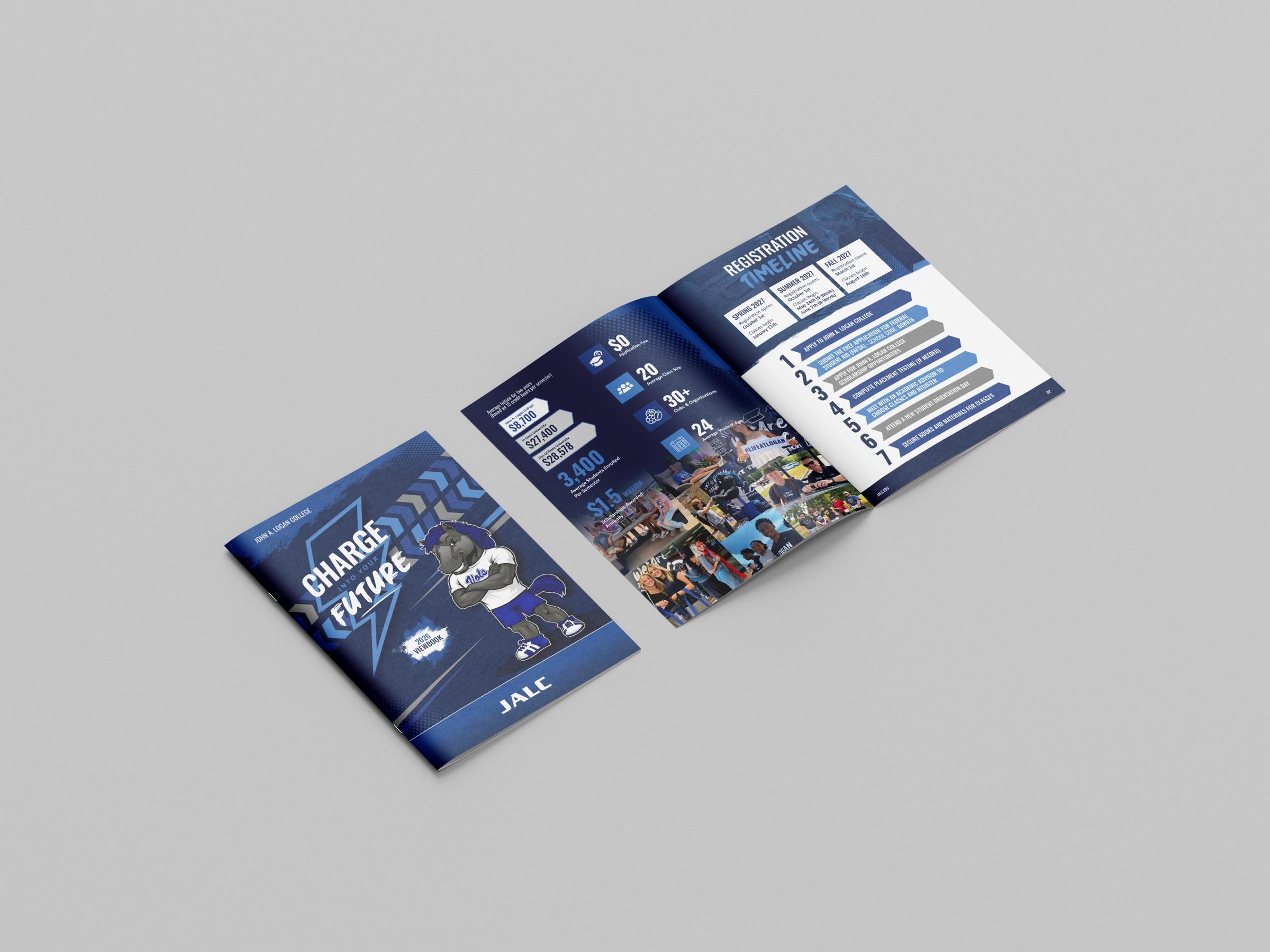
A well-designed viewbook, postcard, or parent guide still cuts through in a way a crowded inbox can't. Direct mail can also be precisely targeted - specific regions, specific graduating classes, specific interests - which makes the personal touch land harder than a mass email ever could.
We've seen this firsthand: a printed student viewbook, a separate parent and guardian guide, and even a custom coloring book ↗︎ for one of our own higher ed clients, each one built for a completely different person holding it. Print isn't a relic here - it's just another audience-specific channel, the same as paid social or email.
Events and open houses
No website or brochure replaces an actual campus visit. Open houses let prospective students and their families tour the facilities, meet faculty, talk to current students, and get a real feel for your institution's culture - all things a page of text can only gesture at.
Personalized invitations, matched to a student's academic interests, location, or stage in the process, consistently outperform a generic mass invite. Pair that with timely reminders and fast post-event follow-up, and attendance - plus the applications that follow it - both improve.
How to Build an Effective Higher Education Marketing Strategy
A strategy that actually works touches every stage of recruitment and engagement, not just the first impression. Here's what that requires.
Know your audience, specifically
Casting a wide net isn't a strategy. Real student personas go well beyond age and location, and should cover:
- Academic interests and career goals - what's actually driving their decision
- Geographic location and willingness to relocate
- Financial considerations - scholarships, aid, and how they plan to pay
- Personal motivations and the goals they're trying to reach
- Cultural background and how it shapes their preferences
- Learning style - hands-on, online, or lecture-based
Personalization in marketing communications
Generic, one-size-fits-all messaging isn't landing with today's applicants the way it used to. Institutions that personalize well see average conversion rates around 5%, and the best individual interactions can reach 12-20% - a gap wide enough that it's hard to justify skipping personalization at this point.
Done well, that means tailored messaging across email, social, and paid ads that actually speaks to what a specific student cares about, not a template with their first name dropped in.
Website optimization
Your website is the hub everything else points back to, and for a lot of prospective students, it's the first real impression of your institution. A handful of things matter most:
- Mobile-responsive design - a meaningful share of students report being online almost constantly, even in class, and a site that doesn't adapt to a phone screen loses them immediately
- Fast load times - a slow site drives up bounce rates and reads as a reflection on the institution itself
- Clear navigation that gets a visitor to program details, admissions requirements, or campus resources without friction
- Prominent, specific calls to action at every stage - tour, application, info session
- An online application system that's genuinely simple to use, with clear instructions and real-time status tracking
- Live chat or a well-built chatbot for routine questions, so your admissions staff can spend their time on the prospects who actually need a human
The tools that actually support this
None of the above works without the right systems behind it: a CRM to manage and personalize every interaction, social scheduling tools to keep content consistent across platforms, a lead management system that pulls prospects from every channel into one place, analytics to see what's actually converting, and email platforms built for segmented, automated campaigns. Used together, these turn a pile of disconnected efforts into one coherent, data-driven strategy - which is a large part of what we help build for our own higher ed clients through automation and CRM systems ↗︎ and website design and development ↗︎.
Alumni Engagement Is Marketing Too
Marketing is ultimately about people, and alumni are some of the most credible advocates an institution has - they bring built-in trust, real networks, and firsthand proof that your programs actually work. Engaging them well strengthens reputation, widens your network, and quietly supports recruitment at the same time.
A dedicated alumni platform or private community gives graduates a reason to stay connected and keep sharing opportunities. Continuing education - workshops, certifications, short courses - gives them a reason to come back even after they've graduated. And a CRM built to track alumni segments and interactions makes it realistic to keep that whole network genuinely engaged instead of just mailing everyone the same annual newsletter.
Alumni success stories are also some of the most effective marketing content available, and chronically underused:
- Featuring real alumni achievements in marketing materials
- Video testimonials and success stories
- Career outcomes and advancement highlighted specifically, not just in aggregate
- Alumni ambassador programs for recruiting events and campus visits
- Interactive, alumni-guided previews of student life
Where Technology Actually Helps
Technology isn't optional anymore for institutions trying to stay competitive - used well, it sharpens targeting, strengthens personalization, and builds the kind of connection that actually moves a prospective student toward enrollment.
Data analytics and marketing automation
Data is what turns guesswork into strategy. Tracking how prospects interact with your website, social content, and emails surfaces real patterns - which programs are generating interest, what content people actually engage with, where applicants are quietly dropping off.
Marketing automation tools put that insight to work: personalized email sequences, lead segmentation, and nurture flows that adjust based on actual behavior instead of a fixed calendar. Platforms like Google Analytics add the traffic and behavior data that keeps the whole strategy honest, and connecting all of it to your student information systems gives real-time visibility into where each prospect actually sits in the funnel.
CRM systems for admissions
A good CRM is the backbone of a modern admissions process, managing every interaction with a prospective student from their first inquiry through enrollment. It centralizes demographics, communication history, application status, and engagement data, so your admissions team can respond quickly and consistently instead of starting from scratch with every email.
Automated reminders, workflow management, and built-in reporting turn an otherwise sprawling process into something your team can actually run efficiently - and the reporting side matters just as much as the automation, since it's what lets you see whether your recruitment process is improving or just staying busy.
Branding and Reputation Management
A clearly defined brand communicates an institution's values and strengths in a way that builds trust and draws in the students and faculty you actually want. Reputation management is the other half of that work - staying ahead of concerns, engaging honestly with stakeholders, and surfacing the real wins. With online reviews and social media doing so much of the talking now, institutions that sit back and hope for the best tend to lose that narrative to whoever's loudest.
Storytelling
Genuine stories - real student outcomes, real faculty work, real campus moments - do more for brand identity than any tagline. They build an emotional connection a features list can't, giving prospective students something to actually picture themselves inside of, and they're what separates a distinct brand from one that sounds like every other admissions page on the internet.
Responding to online reviews
Prospective students increasingly treat reviews the way they'd treat a recommendation from a friend. Monitoring and responding to both the good and the bad, consistently and professionally, matters - a thoughtful response to criticism signals you're actually listening, and acknowledging the positive ones reinforces exactly what you want people to notice first.
Social listening
Keeping an active ear on mentions, relevant conversations, and overall sentiment gives you a real read on how your institution is actually perceived, not just how your own content performs. It's what lets you catch a brewing issue before it becomes a real one, and it's genuinely useful for shaping future content - messaging built around what students are actually saying tends to land a lot better than messaging built around what the marketing office assumes they want to hear.
Higher Education Marketing Trends Worth Watching
Digital trends are reshaping higher ed marketing as fast as institutions can adapt to them, and student expectations are shifting right alongside.
Emerging digital trends
Virtual campus tours. Immersive, 360-degree tours let prospective students walk through classrooms, dorms, and recreational spaces from anywhere - a real asset for international or out-of-state students who can't realistically visit every school on their list in person, and a way to let a prospective engineering major actually see the labs instead of a stock photo of one.
Influencer marketing. Working with current students, alumni, or established creators gives institutions a more authentic, broader reach than owned channels alone. Prospective students trust a real person's take on campus life more than they trust an admissions brochure, and that trust translates directly into visibility and credibility.
Podcasts. A growing number of institutions now run their own, featuring faculty expertise, student stories, and the occasional alumni success story - reaching an audience that's commuting or working out rather than scrolling, and building an ongoing dialogue that steadily reinforces the brand.
Mobile-first design. With billions of smartphones now in active use worldwide, mobile isn't a secondary consideration anymore. Responsive websites, mobile-friendly emails, and ads built for small screens are simply the baseline, and the institutions doing it well are going further - personalized push notifications and real-time updates sent straight to a prospective student's phone.
Sustainability and social responsibility. Green campus initiatives, energy-efficient buildings, and a genuine commitment to diversity and community outreach are showing up more in marketing - not as an afterthought, but because a meaningful share of prospective students are actively weighing these things when they choose a school.
Global marketing trends
Reaching international students takes a genuinely localized approach - multilingual websites, region-specific content, and a presence on the platforms students actually use where they live, whether that's WeChat, WhatsApp, or something else entirely. Partnering with international recruitment specialists, running virtual info sessions and fairs, and highlighting real international student success stories all build the kind of trust a generic global campaign can't.
Demographic shifts mean institutions are recruiting a genuinely more diverse student body - more international students, more first-generation students, and a growing number of non-traditional learners, including working adults returning to school. That shift means inclusive messaging, culturally relevant support, and flexible formats like online and hybrid programs aren't optional add-ons anymore; they're core to the offer.
Artificial intelligence is reshaping outreach, personalization, and engagement across the board. AI-driven analytics give institutions a sharper read on what prospective students actually want, AI chatbots are becoming standard on admissions websites for instant answers, and predictive analytics helps institutions anticipate enrollment trends well before they show up in the actual numbers - which is a big part of why we cover how AI search is changing visibility ↗︎ in its own right.
Tools, Resources, and Where to Keep Learning
A handful of tool categories cover most of what a higher ed marketing team actually needs day to day: a CRM and automation platform to capture and nurture leads without anything falling through the cracks, analytics tools like Google Analytics to understand traffic and behavior, student information systems to manage the administrative side, and email platforms built for segmented, automated campaigns.
If you want a deeper, continually updated resource, our own blog ↗︎ covers higher ed marketing alongside broader strategy, SEO, and branding topics, and our free SEO and AI search guide ↗︎ is a solid next read if visibility is where you want to focus first.
Tracking Your Marketing Success
None of the above means much if you can't tell whether it's working. Tracking the right metrics is what separates a strategy from a guess.
Metrics and KPIs to track
A few numbers matter more than the rest: conversion rate (the share of visitors who actually apply or book a tour), cost per lead, and student retention rate. Together, these show whether your marketing is actually translating into enrollment, not just activity.
Beyond those, website traffic, engagement (social likes, shares, comments, email click-through rate), email open and bounce rates, and time on site all round out the picture of how well your content and campaigns are actually resonating.
Building a marketing dashboard
Pulling all of that into one dashboard - website analytics, social performance, and email metrics in a single view - makes it realistic to track performance in real time instead of digging through five different platforms every month. Updated regularly, it's what lets your team spot a trend early and adjust before a whole recruitment cycle has already passed it by.
The Future of Higher Education Marketing
Student expectations keep evolving, technology keeps moving faster, and your marketing has to keep pace with both. The institutions that pull ahead tend to be doing the same handful of things consistently well:
- Embracing digital transformation without abandoning what still works offline
- Communicating honestly and consistently, rather than defaulting to brochure-speak
- Building a brand identity distinct enough to actually be remembered
- Using real data to sharpen targeting instead of guessing
- Showing up across channels - social, email, web, and in person - instead of picking just one
- Treating optimization as ongoing, not a project with an end date
None of this works as a one-time campaign. It works as a connected system - content, SEO, CRM, creative, and measurement all pointed at the same enrollment goals, refined every cycle instead of relaunched from scratch. That's genuinely the whole job.
If you'd rather talk through what that looks like for your institution specifically than read another framework, that's exactly what our own higher education marketing page ↗︎ is built for.
Frequently asked questions
How can higher education institutions improve their student recruitment process?
By combining targeted digital campaigns with a genuinely optimized website, a CRM that keeps follow-up consistent, and messaging built around specific student personas instead of a single generic pitch. The institutions seeing results are usually doing all of this together, not picking one tactic and hoping it carries the rest.
What role do data and analytics play in higher education marketing?
Data shows you which channels, content, and messages are actually moving prospective students toward enrollment, instead of just generating traffic or engagement that looks good in a report. It's what turns marketing spend into a strategy rather than a recurring guess.
How is AI changing higher education marketing?
AI is showing up in chatbots for admissions questions, predictive analytics for enrollment forecasting, and - increasingly - in how prospective students research and shortlist schools before they ever visit a website, through tools like ChatGPT. That makes AI search visibility a real, current part of a marketing strategy, not just traditional SEO.
What's the difference between traditional and digital marketing for colleges?
Traditional marketing - print, direct mail, in-person events - builds tangible, often more personal touchpoints and still performs well with specific audiences. Digital marketing offers broader reach, sharper targeting, and real measurement. The strongest strategies use both together rather than treating it as a choice between them.
How important is a college's website in the enrollment process?
Extremely. For most prospective students, the website is the first real impression of an institution, and a slow, confusing, or non-mobile-friendly site can lose an applicant before they ever reach an admissions counselor. It needs to be fast, mobile-responsive, and built around a clear path toward a tour, an application, or more information.
Do alumni really matter for marketing, not just fundraising?
Yes. Alumni bring built-in credibility and real proof that an institution's programs work, which makes their stories some of the most persuasive marketing content available - often more effective with prospective students than anything coming directly from the admissions office.
How should a college measure whether its marketing is working?
Track conversion rate, cost per lead, and retention rate as the core KPIs, supported by website traffic, engagement, and email performance. Pulling all of it into one regularly updated dashboard makes it possible to catch what's working - and what isn't - before an entire recruitment cycle has already passed.
Is print marketing - viewbooks, mailers - still worth it for colleges?
Yes, used strategically. Print creates a tangible touchpoint that a crowded inbox can't replicate, and it can be precisely targeted to specific regions, graduating classes, or interests. It works best as one part of a multi-channel strategy rather than the whole plan.



Social media marketing
Social platforms matter because that's genuinely where prospective students already are - Gen Z increasingly starts research there before they ever open Google. A few things make the difference between content that works and content that gets scrolled past: